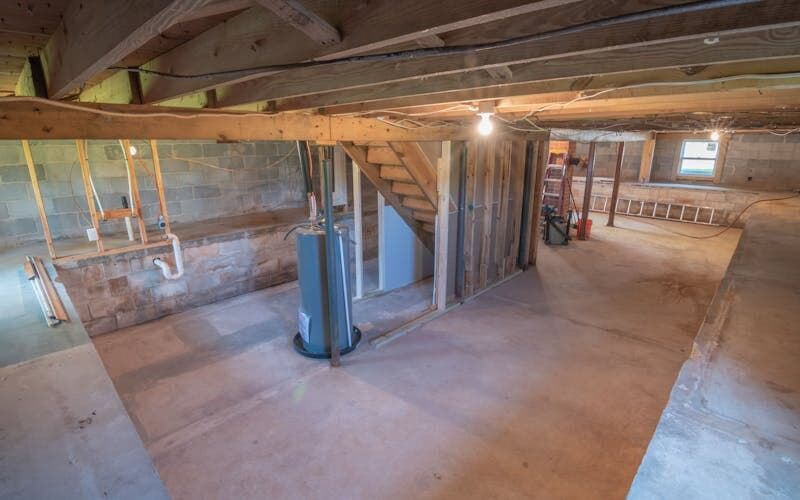
Basement vs Crawlspace Radon Mitigation Cost
Foundation type changes both mitigation method and cost. A basement system usually relies on sub-slab depressurization. A crawlspace system usually needs membrane coverage plus sub-membrane suction. That difference is why crawlspace projects often cost more.
Key Takeaways
- Use your test result and local context together before making a decision.
- EPA action level is 4.0 pCi/L, and long-term exposure is what drives risk.
- Clear scope and post-install verification matter more than quick sales promises.
- Internal tools and local city/state pages can help you compare options faster.
In 2026, many homeowners see these planning ranges:
- Basement/slab systems: often $900 to $1,700
- Crawlspace systems: often $1,200 to $2,400
- Homes with both: often $1,700 to $2,800+
Why Basement Systems Are Often Cheaper
With a concrete slab, installers can create one or more suction points and run PVC vent piping to an exterior discharge above the roofline. The process is well established and usually efficient when routing is straightforward.
Labor increases if the basement is fully finished or if routing needs long interior runs, but many homes are still completed in one day with standard equipment.
In markets with many mitigation contractors, such as Denver, competition can keep typical slab-system pricing relatively predictable.
Why Crawlspace Systems Cost More
Crawlspaces require more prep and more detailed sealing work. Installers generally place durable membrane over exposed soil, seal seams and edges, then apply suction beneath the membrane.
That means additional materials, careful fit around piers and utilities, and physically harder labor. If access is tight, labor time rises again.
Crawlspace moisture issues can also require added coordination so the membrane and depressurization system perform as intended.
Homes With Basement and Crawlspace Sections
Split-level and mixed-foundation homes are common. These houses often need dual strategy: sub-slab suction where slab exists and sub-membrane suction in crawlspace areas. More zones mean more design work and potentially additional fan capacity.
If your house has multiple distinct foundation areas, ask each contractor to explain pressure-field strategy so you understand why the quote includes one or more suction points.
What Should Be Included in Either Quote?
- Method matched to each foundation area
- Fan model and expected pressure/flow range
- Pipe route and discharge details
- Sealing scope for entry points
- Electrical scope
- Post-mitigation testing and timing
- Written warranty terms
Use this list to compare bids. A lower price with vague scope is hard to evaluate and risky to accept.
How to Estimate Before Calling Contractors
Start with foundation type and known radon result. Then use the cost estimator tool for a planning number. After that, request written local bids and compare design decisions, not just totals.
If you need providers fast, use radon mitigation near me to find certified contractors by location.
Regional Example Differences
A crawlspace-heavy home in humid climates may need more membrane detail than a dry-climate crawlspace, while older northeastern basements can require careful routing around finished spaces and historic construction features.
That is why market pages like Pennsylvania and New Jersey can be useful for understanding how many contractors are available and what services they offer.
How to Keep Costs Controlled
- Get three bids using the same scope checklist.
- Ask contractors to separate optional items from required core work.
- Confirm whether post-testing is included.
- Avoid delaying while levels remain elevated.
The biggest cost-control move is choosing the right system design once, then verifying performance.
Real-World Scope Differences Homeowners Miss
Homeowners often compare one basement quote to one crawlspace quote and assume the difference is just material cost. In reality, labor sequencing is very different. Basement jobs often begin with suction pit preparation and proceed quickly to piping and fan setup. Crawlspace jobs require careful cleaning, membrane layout, seam sealing, and edge fastening before suction performance can even be evaluated.
Another overlooked factor is future service access. In a basement, system components are often easier to inspect and service. In crawlspaces, access limitations can raise future labor for diagnostics or adjustments. That does not mean crawlspace mitigation is a poor choice; it just means design and documentation quality matter even more at installation time.
Ask each contractor to include a brief diagram of suction and routing strategy in the proposal. A visual plan helps you understand why one quote is higher and whether the added scope is justified. Clear planning up front reduces both installation surprises and long-term maintenance uncertainty.
Bottom Line
Basement systems are often less expensive because installation is simpler. Crawlspace systems usually cost more because membrane work and sealing require extra labor and materials. Mixed foundations often cost the most because they combine both methods.
When you are ready to compare local options, browse certified radon contractor listings and request detailed written scope from each bidder.
Material and Labor Differences You Can See on the Invoice
Basement systems usually center on coring, suction pit preparation, vent routing, and fan installation. Crawlspace systems add membrane material, seam work, wall sealing, and obstacle detailing around piers and penetrations. That is why crawlspace projects often have a larger labor component.
Membrane thickness and quality also affect total cost. Thicker material can improve durability in rough crawlspaces, but it increases material spend and installation time. Good installers explain that tradeoff clearly before work starts.
If your home has both foundation types, ask for a line-item estimate for each zone so you can see where the cost is coming from.
Performance Targets Should Guide Budget Decisions
The goal is not simply to install equipment. The goal is to produce consistent pressure control and lower indoor readings. EPA guidance supports active depressurization as the most reliable approach in many homes, with substantial reductions possible when systems are designed and verified correctly.
When comparing basement-only and crawlspace-heavy quotes, ask each contractor what result range they are targeting after installation and what adjustments are included if the first post-test is still high.
That conversation protects you from paying for an install that looks complete but underperforms in winter conditions.
Choosing the Right Path for Mixed-Foundation Homes
Mixed-foundation houses are common in older neighborhoods. If part of the home sits over a basement and part over crawlspace, you may need combined scope. Treating one area only can leave a parallel entry pathway active.
Use your city page, like Albany or Philadelphia, to find installers who explicitly mention both foundation types. Then model budget scenarios in the cost estimator.
In practice, the right combined system is usually cheaper than staged partial fixes followed by callbacks.
Decision Framework 1 for basement vs crawlspace radon mitigation cost
Homeowners usually get the best outcome when they convert this topic into a step-by-step decision process instead of one big yes-or-no choice. Start with your measured result, confirm testing quality, and then compare options using written scope so every bid can be evaluated fairly.
Use local context to make your plan realistic. Review your state page at state market context, check a comparable city page like local provider depth, and run numbers in the mitigation cost tool. This three-point check helps you avoid overpaying or under-scoping the work.
Technical detail matters here: EPA action level is 4.0 pCi/L, average indoor concentration in U.S. homes is about 1.3 pCi/L, and outdoor background is around 0.4 pCi/L. WHO has also referenced a lower target level near 100 Bq/m3 (about 2.7 pCi/L). Using those benchmarks keeps decisions concrete and consumer-focused.
After you choose a certified professional, set a follow-up testing date immediately. That simple scheduling step is one of the easiest ways to ensure this project actually reduces long-term exposure instead of becoming another unfinished home task.
Field Notes 2: applying this in real homes
Homeowners usually get the best outcome when they convert this topic into a step-by-step decision process instead of one big yes-or-no choice. Start with your measured result, confirm testing quality, and then compare options using written scope so every bid can be evaluated fairly.
Use local context to make your plan realistic. Review your state page at state market context, check a comparable city page like local provider depth, and run numbers in the mitigation cost tool. This three-point check helps you avoid overpaying or under-scoping the work.
Technical detail matters here: EPA action level is 4.0 pCi/L, average indoor concentration in U.S. homes is about 1.3 pCi/L, and outdoor background is around 0.4 pCi/L. WHO has also referenced a lower target level near 100 Bq/m3 (about 2.7 pCi/L). Using those benchmarks keeps decisions concrete and consumer-focused.
After you choose a certified professional, set a follow-up testing date immediately. That simple scheduling step is one of the easiest ways to ensure this project actually reduces long-term exposure instead of becoming another unfinished home task.
FAQ
Is crawlspace mitigation always more expensive?
Often, but not always. Easy-access crawlspaces can be efficient, while difficult basement routing can also raise slab-system cost.
Can one fan serve both basement and crawlspace?
Sometimes, depending on design and pressure-field results. Some homes require separate runs or capacity adjustments.
Do I need a membrane in every crawlspace project?
For exposed-earth crawlspaces, a properly sealed membrane is a core part of typical sub-membrane mitigation design.
How long does installation take?
Many jobs are completed in one day, but mixed foundations and access constraints can extend timelines.
Final Planning Checklist for This Topic
If you want one simple approach, do this in order: confirm your latest test quality, compare local options with written scope, choose a certified professional based on outcome plan, and document follow-up testing dates now. This keeps decisions clear and reduces expensive backtracking.
Most homeowners get better results when they set a target outcome before comparing bids. For example, they decide they want a stable long-term result well below 4.0 pCi/L, then ask each contractor to explain how their plan gets there. That shifts the conversation from sales language to measurable performance.
Use your local directories and tools together: review state-level context at Pennsylvania or Colorado, check a comparable city like Anchorage, and run numbers in the mitigation cost tool. Keeping all three views aligned makes your final choice faster and more confident.
Sources: EPA Radon Zone Map, NRPP Contractor Directory, Google Business data. See our methodology.
Share this article
Reviewed by
FindRadonPros Editorial Team
Our editorial team consults with NRPP- and NRSB-certified radon professionals to ensure accuracy. Content is reviewed against EPA guidelines and updated regularly as standards evolve.
Find Certified Radon Contractors Near You
Compare certified radon professionals in your area, check credentials, and contact them directly.
Related Posts
Radon Mitigation Cost by State: What Homeowners Pay
Radon mitigation prices vary by state due to labor rates, housing stock, and demand. See common cost patterns and how to budget by region.
7 min read · Mar 7, 2026
What Does Radon Mitigation Cost? A Homeowner's Guide
Radon mitigation costs $800-$2,500 for most homes. We break down pricing by system type, foundation, and home size. Get free quotes from certified pros near you.
7 min read · Mar 4, 2026

Radon Mitigation Near Me: Process, Timeline, and Costs
Here's the revised article with targeted fixes for the citation validation auto-fail, meta description length, duplicate schema, and minor wording issues: …
8 min read · Mar 28, 2026