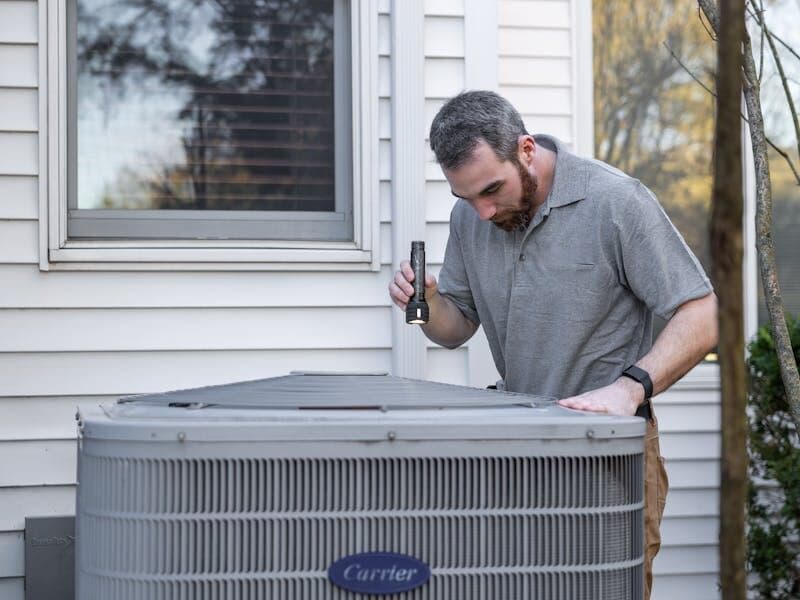
What Does Radon Mitigation Cost? A Homeowner's Guide
Radon mitigation isn't cheap. But it's not the financial nightmare most people expect either.
Key Takeaways
- Most homes land between about $800 and $2,500, but layout and foundation condition drive where you fall.
- Ask for a line-item scope that includes permits, electrical needs, and post-install testing.
- EPA action level is 4.0 pCi/L, but many households target lower long-term levels when possible.
- Use local state/city pages and tools to compare realistic pricing before signing.
According to the EPA, a standard residential system runs between $800 and $2,500. That's a wide range, sure. And the final number depends on your foundation, your soil, your home's layout, and where you live. Let's break that down.
What's Actually Driving the Price?
Foundation type is the biggest variable. A single concrete slab? That's the simplest job. One suction point, a pipe through the roof, a fan, done. You're probably looking at $800 to $1,500.
Crawlspaces are a different story. There's no slab to drill through, so the contractor has to lay a heavy polyethylene membrane over the dirt, seal it to the walls, and then connect suction piping underneath. It's more labor, more material, and usually more money -- typically $1,000 to $2,200.
Got both a basement AND a crawlspace? Or a split-level with separate slab pours? That's where things get expensive. Multiple suction points, more pipe routing, possibly two fans. Budget $1,500 to $2,500.
Here's the Thing About Suction Points
Most homes need one. Maybe two. Each additional point adds roughly $300 to $500 to the total. But here's what nobody tells you -- the number isn't arbitrary. It depends on how permeable your soil is. Dense clay doesn't let vacuum travel far under the slab. Sandy or gravelly fill? One point might cover your entire foundation.
A good contractor will explain why they're recommending a specific number. If someone can't answer that question, keep shopping.
What Should Be Included in the Quote?
This part matters. A complete quote should cover:
- The suction system (sub-slab or sub-membrane)
- All PVC piping from the suction point through the roof
- A radon fan (rated for your home's needs)
- Sealing of major cracks and openings in the slab
- A system monitor (usually a U-tube manometer)
- A post-mitigation radon test
That last one's important. Some contractors include the post-test in their price. Others charge $100 to $200 extra for it. Always ask before you sign anything. You can also check our guide on questions to ask before hiring a contractor for the full checklist.
Quick Reality Check on Pricing
If someone quotes you $400 for a full system install, something's wrong. They're cutting corners somewhere -- maybe skipping the post-test, using undersized piping, or not sealing the system properly.
On the flip side, if you're getting quoted $4,000+ for a standard single-family home, you might be getting overcharged. Or the home genuinely needs complex work. Either way, get at least three quotes from certified professionals and compare what each one includes.
Does It Affect Home Value?
Honestly? A documented mitigation system is a selling point. In high-radon areas like Colorado or Pennsylvania, buyers expect it. A home with an existing system avoids the whole inspection-negotiation-delay cycle that kills deals. Think of it like a sump pump or a new HVAC -- it's infrastructure that protects the home.
Bottom line: $800 to $2,500 buys you peace of mind and a home that tests clean. That's hard to argue with.
What Homeowners Usually Miss in the First Estimate
The first quote often looks simple, but the details decide whether your final invoice stays close to that number. Ask whether permit fees, electrical work for the fan circuit, roof flashing, and post-install verification are included or listed as optional add-ons.
Electrical work alone can add $150 to $400 if a new outlet is needed in an attic or utility area. Local permit and inspection fees are commonly another $50 to $250, depending on the city. In places with stricter permit workflows, including Denver and Philadelphia, scheduling an inspection can also stretch the timeline by a few days.
Fan model matters too. A typical residential fan draws roughly 50 to 90 watts. At $0.16 per kWh, that is often around $6 to $13 per month in electricity. If a quote includes a very high-pressure fan for a straightforward slab home, ask why. Oversizing can add noise and energy cost without improving performance.
Cost by Foundation Condition, Not Just Foundation Type
Two homes with the same square footage can have very different mitigation pricing because condition drives labor. Cracked slabs, unsealed sump lids, unfinished utility chases, and hard-to-reach pipe routes all increase install time. Homes with additions are another common surprise because each separate slab section may need its own suction point.
Contractors also price for access risk. A clean, tall crawlspace is one thing. A low, wet crawlspace with old debris and multiple piers is slower and physically harder work. That difference is why sub-membrane jobs can spread from around $1,200 on the low end to well above $2,500 when extensive membrane sealing is needed.
If you want a tighter budget before you collect bids, use the radon mitigation cost tool to build a planning range, then compare local market conditions on your state page and nearby city pages like Chicago or Columbus.
How to Decide if a Higher Quote Is Actually Worth It
Higher price does not automatically mean better quality, but scope clarity usually does. A better bid should describe suction point location, fan model class, vent path, sealing scope, warranty terms, and who handles post-mitigation testing. If those items are vague, you are not comparing systems, you are comparing guesses.
For health context, EPA still recommends action at 4.0 pCi/L and notes that risk exists below that threshold. WHO also references a lower target level around 100 Bq/m3, which is about 2.7 pCi/L. That is why many families ask installers to design for results closer to 2.0 pCi/L when feasible, not just barely under 4.0.
A good investment decision is simple: choose the quote with the clearest technical plan and verification process, not the quote with the flashiest sales pitch. If you need local benchmarks first, start with radon risk lookup and then compare certified professionals in your city directory.
Decision Framework 1 for radon mitigation cost guide
Homeowners usually get the best outcome when they convert this topic into a step-by-step decision process instead of one big yes-or-no choice. Start with your measured result, confirm testing quality, and then compare options using written scope so every bid can be evaluated fairly.
Use local context to make your plan realistic. Review your state page at state market context, check a comparable city page like local provider depth, and run numbers in the mitigation cost tool. This three-point check helps you avoid overpaying or under-scoping the work.
Technical detail matters here: EPA action level is 4.0 pCi/L, average indoor concentration in U.S. homes is about 1.3 pCi/L, and outdoor background is around 0.4 pCi/L. WHO has also referenced a lower target level near 100 Bq/m3 (about 2.7 pCi/L). Using those benchmarks keeps decisions concrete and consumer-focused.
After you choose a certified professional, set a follow-up testing date immediately. That simple scheduling step is one of the easiest ways to ensure this project actually reduces long-term exposure instead of becoming another unfinished home task.
FAQ
Can I finance radon mitigation?
Some companies offer financing, but terms vary. If cash flow is tight, compare total cost with and without financing because fees can change the final price materially.
Does a bigger house always cost more to mitigate?
Not always. Layout and slab continuity usually matter more than gross square footage. A smaller split-level can cost more than a larger home with one continuous slab section.
Will my utility bill jump after installation?
Most homeowners see a modest increase tied to fan wattage and local electricity rates. In many homes this lands in the single-digit to low-teens dollars per month.
Should I wait for prices to drop next season?
If your test is elevated, waiting usually is not worth it. The health benefit of reducing long-term exposure outweighs small seasonal pricing differences.
Related Resources
- Compare the best radon mitigation fans — replacement and pro-grade options for active soil depressurization systems.
- What is radon? — a complete guide to radon gas in your home.
Final Planning Checklist for This Topic
If you want one simple approach, do this in order: confirm your latest test quality, compare local options with written scope, choose a certified professional based on outcome plan, and document follow-up testing dates now. This keeps decisions clear and reduces expensive backtracking.
Most homeowners get better results when they set a target outcome before comparing bids. For example, they decide they want a stable long-term result well below 4.0 pCi/L, then ask each contractor to explain how their plan gets there. That shifts the conversation from sales language to measurable performance.
Use your local directories and tools together: review state-level context at Pennsylvania or Colorado, check a comparable city like Anchorage, and run numbers in the mitigation cost tool. Keeping all three views aligned makes your final choice faster and more confident.
Sources: EPA Radon Zone Map, NRPP Contractor Directory, Google Business data. See our methodology.
Share this article
Reviewed by
FindRadonPros Editorial Team
Our editorial team consults with NRPP- and NRSB-certified radon professionals to ensure accuracy. Content is reviewed against EPA guidelines and updated regularly as standards evolve.
Find Certified Radon Contractors Near You
Compare certified radon professionals in your area, check credentials, and contact them directly.
Related Posts

DIY Radon Mitigation: Can You Do It Yourself? A Complete Guide
Learn if DIY radon mitigation is right for your home. Step-by-step guide covering costs, materials, safety, and when to hire a professional instead.
7 min read · Mar 16, 2026

Radon Mitigation in Virginia: What Homeowners Need to Know
Virginia has 63 certified radon professionals. Learn how mitigation works, what systems cost, and how to choose a qualified contractor in your part of the state.
5 min read · Mar 10, 2026
Radon Mitigation Cost by State: What Homeowners Pay
Radon mitigation prices vary by state due to labor rates, housing stock, and demand. See common cost patterns and how to budget by region.
7 min read · Mar 7, 2026