Why Basements Have Higher Radon Levels
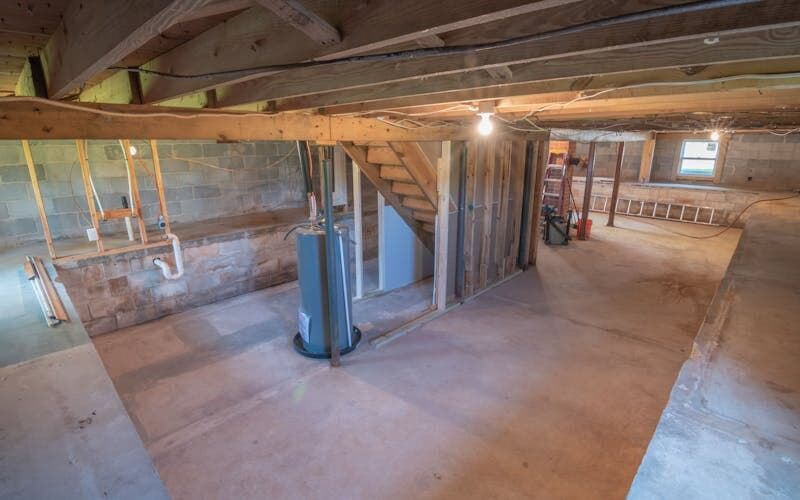
Basements are usually where radon shows up first and strongest. The reason is simple: they are closest to the soil source and full of potential entry paths.
Key Takeaways
- Use your test result and local context together before making a decision.
- EPA action level is 4.0 pCi/L, and long-term exposure is what drives risk.
- Clear scope and post-install verification matter more than quick sales promises.
- Internal tools and local city/state pages can help you compare options faster.
Understanding why basement levels run higher helps you test better and choose the right mitigation approach.
Radon Comes From Soil Gas
Radon is a radioactive gas produced as uranium in soil and rock decays. Outdoors it disperses quickly. Indoors, especially in lower levels, it can accumulate if gas enters faster than ventilation removes it.
Because basement floors and walls contact soil directly, they are the most likely part of the home to intersect soil-gas pathways.
Entry Points Are More Common Than Most People Think
Common basement entry points include slab cracks, wall-floor joints, utility penetrations, sump pits, and small construction gaps. Even when cracks look minor, pressure differences can still pull gas inward.
Newer homes are not immune. Tighter envelopes can reduce natural air exchange, sometimes allowing radon to build up more efficiently.
The Stack Effect Pulls Gas Upward
Warm indoor air rises and exits through upper parts of the home. That upward movement creates slight negative pressure in lower areas, which can draw soil gas in through basement openings.
This pressure-driven flow is a major reason radon control systems focus on reducing sub-slab pressure relative to indoor pressure.
Seasonal Changes Can Raise Basement Readings
Closed windows, heating patterns, and frozen or saturated ground can alter pressure and ventilation dynamics. Many homes record higher levels in cooler seasons, though variation exists year-round.
This is why testing protocols and retesting schedules matter more than a single season snapshot.
Finished Basements Still Need Testing
Finishing a basement does not eliminate radon risk. Flooring and wall finishes may hide cracks, but they do not remove soil-gas pressure. If the space is occupied regularly, testing is especially important.
If you are finishing or remodeling, test before and after the work so changes in airflow or sealing do not surprise you later.
How Basement Mitigation Works
Most basement systems use active sub-slab depressurization. A fan draws soil gas from beneath the slab and exhausts it safely above the roofline before it enters living spaces.
Done correctly, this approach can reduce indoor levels significantly in most homes. Post-install testing confirms real performance.
If you need help finding installers, start with radon mitigation providers near you.
Testing Tips for Basement Homes
- Test in the lowest livable level, following protocol strictly.
- Maintain closed-house conditions during short-term tests.
- Avoid placing devices near drafts, kitchens, or bathrooms.
- Retest after major renovations, HVAC changes, or foundation work.
For local context, check your state and city pages, such as New York and Boston, then align testing with local service availability.
Basement vs Upper-Floor Readings
Upper floors can show lower concentrations because they are farther from entry points and often have different ventilation conditions. But if basement levels are high, overall household exposure can still be meaningful, especially when lower levels are occupied.
Do not assume safety based only on an upstairs spot-check.
How Basement Layout Affects Readings
Basement geometry can influence where concentration appears highest. Large open utility areas may show different short-term patterns than partitioned finished rooms with lower airflow. Sump areas, utility penetrations, and floor-wall joints often become focal points for entry, especially when pressure differences are active.
This does not mean you should test in multiple random spots at once. It means you should follow established placement guidance and then use follow-up testing if interpretation requires more detail. Consistent methodology is the best way to compare results over time.
If your basement is occupied as bedroom or office space, prioritize rapid follow-up when elevated levels are found. Occupancy pattern is a key part of practical risk management, and timely mitigation can quickly reduce long-term exposure concerns.
When to Escalate From Testing to Mitigation
If repeat or confirmation testing remains elevated, move quickly to mitigation quotes instead of repeatedly retesting without a plan. Additional measurements can help, but they should support a decision timeline. Long delays with known elevation usually add stress without meaningful benefit.
A certified contractor can explain whether your basement layout suggests straightforward mitigation or a more customized approach.
Bottom Line
Basements have higher radon levels because they are closest to soil gas, contain common entry points, and experience pressure dynamics that pull gas inward. The solution is practical: test correctly and mitigate when needed.
To take the next step, compare local certified options in state and city contractor directories.
Why Basement Construction Details Matter So Much
Basements are not high-risk just because they are underground. They are high-risk because they often have multiple entry pathways where slab, wall, and utility penetrations meet. Even small cracks can become active entry points when indoor pressure is lower than soil pressure.
Sump pits, floor-wall joints, and expansion cracks are common contributors. Finished flooring does not eliminate these pathways; it just hides them visually.
If your lower level is regularly occupied, testing there should be your priority rather than assuming upper floors represent exposure accurately.
Seasonal Basement Behavior and What to Expect
Many homeowners see higher basement readings in colder months due to stronger stack effect and tighter building operation. That seasonal pattern can surprise people who tested once in mild weather and assumed they were done.
Long-term testing helps capture this variation and gives a better annual picture. If your short-term result is close to a decision threshold, a follow-up test in another season can add confidence.
Use Understand Your Results to interpret swings without overreacting to one-day changes.
How Basement Mitigation Solves the Core Problem
Basement-focused systems usually use sub-slab depressurization to reverse pressure and vent soil gas safely above the roofline. Well-designed systems can reduce indoor levels significantly, often in the 80% to 99% range depending on conditions and installation quality.
For planning, estimate likely budget with the cost tool and compare installer availability in nearby markets like Albany and Des Moines.
If your basement is where kids play, where you work, or where guests sleep, reducing radon there has an immediate practical benefit for everyday exposure.
Decision Framework 1 for is radon common in basements
Homeowners usually get the best outcome when they convert this topic into a step-by-step decision process instead of one big yes-or-no choice. Start with your measured result, confirm testing quality, and then compare options using written scope so every bid can be evaluated fairly.
Use local context to make your plan realistic. Review your state page at state market context, check a comparable city page like local provider depth, and run numbers in the mitigation cost tool. This three-point check helps you avoid overpaying or under-scoping the work.
Technical detail matters here: EPA action level is 4.0 pCi/L, average indoor concentration in U.S. homes is about 1.3 pCi/L, and outdoor background is around 0.4 pCi/L. WHO has also referenced a lower target level near 100 Bq/m3 (about 2.7 pCi/L). Using those benchmarks keeps decisions concrete and consumer-focused.
After you choose a certified professional, set a follow-up testing date immediately. That simple scheduling step is one of the easiest ways to ensure this project actually reduces long-term exposure instead of becoming another unfinished home task.
Field Notes 2: applying this in real homes
Homeowners usually get the best outcome when they convert this topic into a step-by-step decision process instead of one big yes-or-no choice. Start with your measured result, confirm testing quality, and then compare options using written scope so every bid can be evaluated fairly.
Use local context to make your plan realistic. Review your state page at state market context, check a comparable city page like local provider depth, and run numbers in the mitigation cost tool. This three-point check helps you avoid overpaying or under-scoping the work.
Technical detail matters here: EPA action level is 4.0 pCi/L, average indoor concentration in U.S. homes is about 1.3 pCi/L, and outdoor background is around 0.4 pCi/L. WHO has also referenced a lower target level near 100 Bq/m3 (about 2.7 pCi/L). Using those benchmarks keeps decisions concrete and consumer-focused.
After you choose a certified professional, set a follow-up testing date immediately. That simple scheduling step is one of the easiest ways to ensure this project actually reduces long-term exposure instead of becoming another unfinished home task.
FAQ
Do all basements have high radon?
No. Many basements test low, but they are statistically more likely to show elevated levels than upper floors.
Can sealing cracks alone fix basement radon?
Sealing helps, but it is usually not enough by itself when levels are elevated.
Should I test only in winter?
You can test any time if protocol is followed. Seasonal retesting can provide additional confidence.
If my basement is unfinished, should I still test?
Yes. Unfinished basements can still influence radon levels throughout the home.
Final Planning Checklist for This Topic
If you want one simple approach, do this in order: confirm your latest test quality, compare local options with written scope, choose a certified professional based on outcome plan, and document follow-up testing dates now. This keeps decisions clear and reduces expensive backtracking.
Most homeowners get better results when they set a target outcome before comparing bids. For example, they decide they want a stable long-term result well below 4.0 pCi/L, then ask each contractor to explain how their plan gets there. That shifts the conversation from sales language to measurable performance.
Use your local directories and tools together: review state-level context at Pennsylvania or Colorado, check a comparable city like Anchorage, and run numbers in the mitigation cost tool. Keeping all three views aligned makes your final choice faster and more confident.
Medical Disclaimer
Radon is classified as a Group 1 carcinogen by the World Health Organization (WHO) and is the second leading cause of lung cancer according to the EPA. Information on this site is educational, not medical advice. Consult your physician for health concerns related to radon exposure.
Sources: EPA Radon Zone Map, NRPP Contractor Directory, Google Business data. See our methodology.
Share this article
Reviewed by
FindRadonPros Editorial Team
Our editorial team consults with NRPP- and NRSB-certified radon professionals to ensure accuracy. Content is reviewed against EPA guidelines and updated regularly as standards evolve.
Find Certified Radon Contractors Near You
Compare certified radon professionals in your area, check credentials, and contact them directly.
Related Posts
Radon Levels by State: Where Is Radon Most Common?
The EPA classifies US counties into 3 radon zones. We break down the highest-risk states and why you should test regardless of where you live.
8 min read · Mar 4, 2026
Radon Levels by ZIP Code: Check Local Risk
Can you check radon levels by ZIP code? Yes, as a starting point. Learn how ZIP-level risk works and why every home still needs testing.
8 min read · Mar 7, 2026

Comparing Radon Services in the Philadelphia Metro Area
Radon Services in the Philly Metro: How to Compare The Philadelphia metro area spans three states, dozens of counties, and a wide range of geology.
9 min read · Mar 28, 2026